Introduction to Mplus
Mplus is a powerful statistical package used for the analysis of latent variables. Among the kinds of analysis it can perform are exploratory factor analysis, confirmatory factor analysis, latent class...
This workshop series is to present overviews to the exciting deep learning techniques and to provide a practical guide for general audience to step into the field. It will be...
This workshop introduces R packages and functions that help users import, transform and manage their data in preparation for analysis. The seminar focuses on the “tidy data” philosophy encouraged y...
MATLAB, developed by MathWorks, has been used in research and the industry for computations, simulations, data analysis and visualization across multiple disciplines such as physical sciences, engineering, economics, and biomedical...
Learn how to break the rules of mapmaking! This workshop's main lecture introduces disruptive mapping practices from critical cartography and indigenous critical theory and applies them to a Critical COVID-19...
This course will teach attendees how to build interactive widgets and visualizations for exploring equations, datasets, and machine learning models. This course will touch on several machine learning tools in...
This workshop will give a practical overview of exploratory (EFA) in SPSS. Topics to be covered include factor extraction, principal components analysis, estimation methods, factor rotation, refining the factor structure,...
The Hoffman2 cluster is a powerful computational resource for the UCLA research community. This class is designed to clarify the process of getting started on the cluster, navigating the command...
SQL is a standard language designed to query and extract data from tables stored in a database. Python, on the other hand, has well-known libraries specially designed for data analysis...
In this talk, I introduce the concepts and jargon of power and sample size calculations such as alpha levels, power, and minimum detectable effect sizes. I do several simple calculations...
This class will address the process of creating MATLab standalone executables and running MATLab in batch, as well as running Abaqus python scripts. It will give examples of how to...
Time: 12:00 PM – 1:00 PM Date: June 05, 2020 Location: Zoom (you will receive an email after your rsvp) RSVP HERE Link to the presentation's recording and slides Abstract:...
The Jupyter Notebook is a computing tool that allows users to edit and run Python, R, Julia (and many other programming languages) inside a web browser. Furthermore, it is a...
Git is a software tool that helps users manage changes to their software over time. Git will allow you to maintain a complete change history of every file, create branches...
Register in advance: Please REGISTER using the Zoom Meeting Link before joining! There are no pre-requisites to take this workshops, but it is recommended that you take the following...
SQL is a standard language designed to query and extract data from tables stored in a database. In this short class, you will learn how to store, query, and manipulate...
The purpose of this workshop is to discuss commonly used techniques for handling missing data and common issues that could arise when these techniques are used. In particular, we will...
QGIS workshop for processing and visualizing demographic census data, commonly used in the social sciences. If you have any further questions regarding the workshop, please contact instructor Albert Kochaphum.
Recent years have witnessed a dramatic resurgence of interest in applying deep learning in various research and application areas. In this 2 hour session, we will present a broad and...
The Department of Energy, National Science Foundation, and the National Aeronautical Space Agency support an ecosystem of “leadership class” computing facilities housing some of the world’s most advanced supercomputers and...
We are increasingly sharing our data and research in virtual environments. WebVR (or WebXR as it’s now known) is an open standard that allows 3D / virtual reality (VR) experiences...
Description coming soon. If you have any further questions regarding the workshop, please contact instructor Raffaella D'Auria.
On macOS, Linux, or Windows with Cygwin, or other POSIX-compliant environments, a number of versatile, time-tested command-line open-source tools with text-based user interface (TUI) are available to support performing common...
This workshop will show how descriptive analyses, both numerical and graphical, can be done with continuous and categorical variables. Subpopulation analysis will be discussed, and then examples of OLS regression...
The term "data science" has become a ubiquitous and all-encompassing term to address any field that utilizes data analytics in one form or another. Despite having such a broad mandate,...
The Hoffman2 Cluster is a powerful computational resource for the UCLA research community. This workshop is designed to: 1) introduce users to the Hoffman2 Cluster environment and clarify the process...
Anaconda is a popular, free, and open-source distribution of Python and R packages for scientific computing and data analysis. Many users prefer using Anaconda on the personal computer instead of...
Learn how to break the rules of mapmaking! This workshop’s main lecture introduces disruptive mapping practices from critical cartography and indigenous critical theory and applies them to crafting a story...
As Jupyter Notebook is becoming more and more popular for data scientists, researchers and software engineers, many people may have already heard about Google Colab. As one of the most...
This workshop series is to present overviews to the exciting deep learning techniques and to provide a practical guide for general audience to step into the field. It will be primarily appropriate for the beginners who want to learn the techniques and apply to their future research activities. Researchers with deep learning experiences are expected to get benefits from related discussions as well. In the first session of the series, we will give a broad introduction about deep learning and neural network. No specific prerequisite is required.
The Hoffman2 cluster is a powerful computational resource for the UCLA research community. This workshop is part of a three-seminar series designed to introduce users to the Hoffman2 cluster environment...
Please RVSP here. Workshop will be conducted in Zoom. Invites are sent out the day before the workshop. SAS is a powerful statistical package that runs on many platforms, including...
This workshop series is to present overviews to the exciting deep learning techniques and to provide a practical guide for general audience to step into the field. It will be primarily appropriate for the beginners who want to learn the techniques and apply to their future research activities. Researchers with deep learning experiences are expected to get benefits from related discussions as well. In the second session of the series, we will look into the procedures of working on a general deep learning project, especially on how to train a deep neural network...
Please RVSP here. Workshop will be conducted in Zoom in PST time. Invites are sent out the day before the workshop. There are many ways to communicate the results of...
This workshop series is to present overviews to the exciting deep learning techniques and to provide a practical guide for general audience to step into the field. It will be primarily appropriate for the beginners who want to learn the techniques and apply to their future research activities. Researchers with deep learning experiences are expected to get benefits from related discussions as well. In the third session of the series, we will introduce PyTorch deep learning framework, illustrate the basic usage of tensors and automatic differentiation, and solve a simple temperature-conversion problem using PyTorch...
The Hoffman2 cluster is a powerful computational resource for the UCLA research community. This workshop is part of a three-seminar series designed to introduce users to the Hoffman2 cluster environment...
Please RVSP here. Workshop will be conducted in Zoom in PST time. Invites are sent out the day before the workshop. SPSS is a very easy-to-use statistical package that runs...
This workshop series is to present overviews to the exciting deep learning techniques and to provide a practical guide for general audience to step into the field. It will be primarily appropriate for the beginners who want to learn the techniques and apply to their future research activities. Researchers with deep learning experiences are expected to get benefits from related discussions as well. In the fourth session of the series, we will introduce convolutional neural network and learn how to use PyTorch to do image processing for classic Dogs-vs-Cats problem...
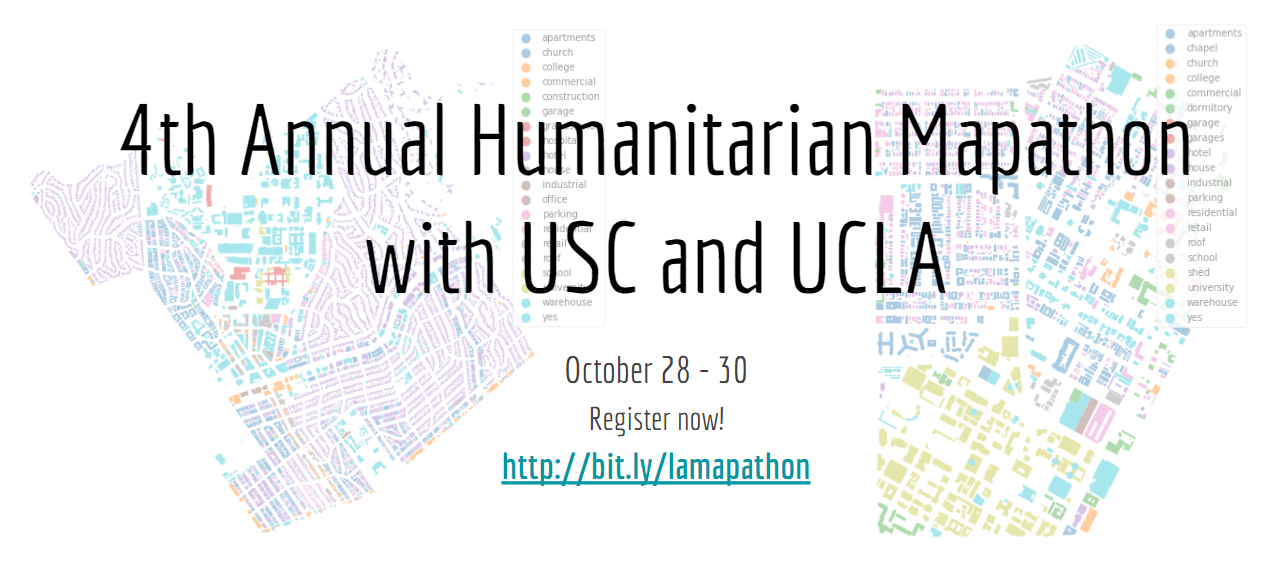
REGISTRATION IS NOW OPEN, RSVP HERE! Wednesday October 28th, 10am (PDT): Welcome message and humanitarian map training Thursday October 29th: Continue mapping and a day of workshops9am Open Street Map...
Please RVSP here. Workshop will be conducted in Zoom in PST time. Invites are sent out the day before the workshop. This workshop is part one of a four-part workshop...
This workshop series is to present overviews to the exciting deep learning techniques and to provide a practical guide for general audience to step into the field. It will be primarily appropriate for the beginners who want to learn the techniques and apply to their future research activities. Researchers with deep learning experiences are expected to get benefits from related discussions as well. In the fifth session of the series, we will introduce data augmentation and transfer learning techniques to get a better solution for deep learning projects with PyTorch...
Please RVSP here. Workshop will be conducted in Zoom in PST time. Invites are sent out the day before the workshop. R is a powerful statistical package that runs on...
This workshop series is to present overviews to the exciting deep learning techniques and to provide a practical guide for general audience to step into the field. It will be primarily appropriate for the beginners who want to learn the techniques and apply to their future research activities. Researchers with deep learning experiences are expected to get benefits from related discussions as well. In the sixth session of the series, we will introduce Generative Adversarial Networks (GANs) and illustrate the fundamental GAN techniques on how to use DCGANs to generate dog images with PyTorch...
We will explore the features of the Julia programming language in the context of research computing, and compare it with other scripting languages such as Python and MATLAB. We will also discuss Julia language's ecosystem, including its standard library, documentation system, unit test, package management and more, from the standpoints of reproducible computational science and modern software engineering.
Please RVSP here. Workshop will be conducted in Zoom in PST time. Invites are sent out the day before the workshop. Stata is a powerful and yet easy-to-use statistical package...
This class will demonstrate how to use MATLAB to create data visualization and animation for publications or presentations. We will discuss many plotting functions and techniques available in MATLAB and learn how to use these commands to handle and customize your graphics in practice. The materials include simple 2D/3D plots to present scalers and vectors, filled plots to handle continuously spatial data, geographic plots to deal with geographic information, animation to show variation in temporal data. Matplotlib used in Python will be also introduced so one can easily apply these plotting techniques in Python.
We will discuss using Markdown (a light-weight markup language with plain-text formatting syntax) for technical writing, including the support of LaTeX-style mathematics typesetting and bibliography. The approach can be applied to writing dissertation, research manuscripts, presentation slides, and web pages from the same set of source files. A number of documentation-building tools around the Markdown format will be introduced. We will also discuss using GitHub and Travis CI for version control and automatic building of documents and web pages.
The Hoffman2 cluster is a powerful computational resource for the UCLA research community. This workshop is part of a three-seminar series designed to introduce users to the Hoffman2 cluster environment...
Register now for the first UC GIS Week conference from Nov. 17th - 19th! The UC GIS Week committee is proud to announce the first UC-wide GIS Week. Join us...